
The clan with which I married
Chief Kaji Kalyan Singh’s ancestor had lived in Lalitpur’s Yang Bahal. He had a son, Banshidhar, who had a son, Lakshmidhar. Banshidhar and Lakshmidhar both worked as Kajis throughout their lives.
Kaji Lakshmidhar had six sons, Dharanidhar, Gangadhar, Shukradhar, Khadgadhar, Rajyadhar, and Bishnudhar, who all served as Kaji for 195 years, from BS 1630 to 1825, according to the Kalyan Singh Guthi Banshabali.
When King Prithivi Narayan Shah of Gorkha kingdom attacked the Kathmandu Valley, six sons of Kaji Laxmidhar were working as Kajis in the valley. At the time, they had captured Dal Mardan Shah, Prithvi Narayana Shah’s brother. Five of the six Kaji had chosen to sentence him to death. It is reported that Khadgadhar Kaji saved him from being slain, and transported to Gorakha after obtaining permission from five Kajis.
Except for Khadgadhar Singh, five Lalitpur Kajis were murdered after Prithivi Narayana Shah’s triumph over the valley.
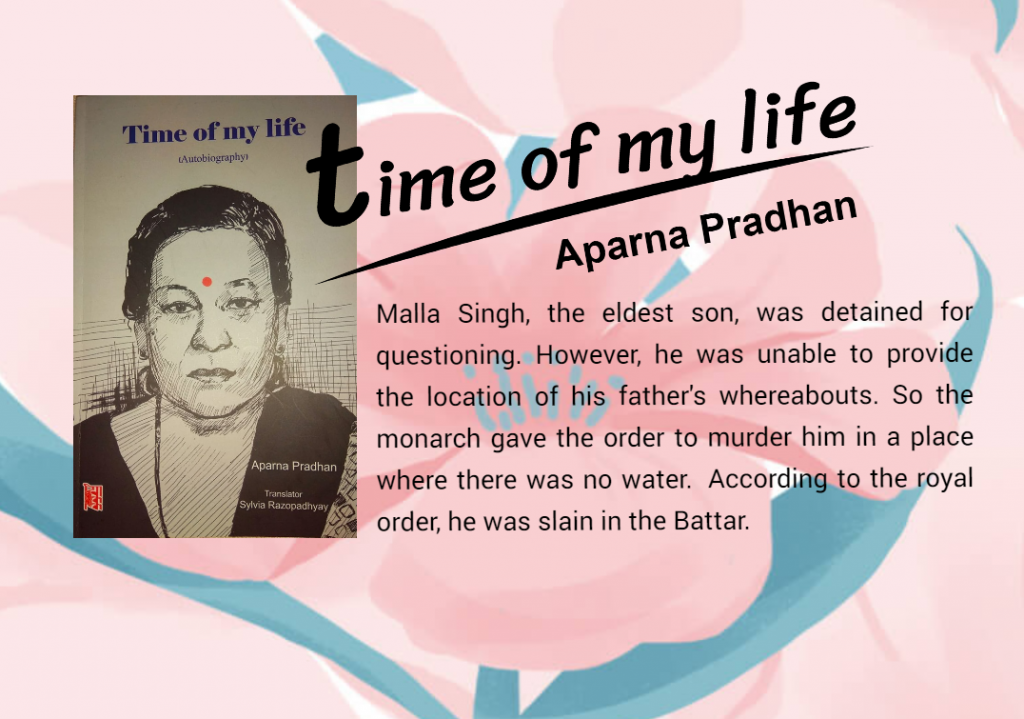
Khadgadhar Kaji, vanquished in the conflict, withdrew into the bush near Bag Bhairav in Kirtipur. An intensive search was conducted in his home at the time, but the army was unable to locate him. Instead, four people were discovered in his home: his kids Malla Singh (18), Gajendra Singh (12), Motiram Singh (6), and his wife. Malla Singh, the eldest son, was detained for questioning. However, he was unable to provide the location of his father’s whereabouts. So the monarch gave the order to murder him in a place where there was no water. According to the royal order, he was slain in the Battar.
Khadgadhar received the message to murder his eldest son. Realizing he was no longer secure in Nepal, he fled to Banaras (Kashi) with his family and nephew Thakur Singh, where he began to assist Shahs. Knowing this, Prithvi Narayana Shah later called Khadgadhar Singh to Nepal to assist him in running the state.
Khadgadhar was of working age at the time. After making a legitimate request for his children’s security, he sent his sons with Thakur Singh to Nepal. The king granted his request, raising his sons there at the Hanumandokha Palace.
When they turned twenty, Khadgadhar had ordered his sons to leave the palace. Gajendra Singh had sent a request off, departing the Hanumandokha Palace at that age, in accordance with his father’s instructions.
Assemblies were made to go to Maru Tole, the western portion of Maru Ganesh (Ashok Vinayak), in response to his desire. Gajendra Singh moved in and installed the clan God after that.
Family members of this clan have relocated to other locations as a result of urbanization in the modern world. They do, however, make the house in the Maru their clan home.
On the day of Narsingh Chaturdashi every year, this clan gathers for a special devotion of Bag Bhairav, the deity of Kirtipur, who serves as their clan deity. Newborns, commemorating the rice feeding rite, and newlyweds from the same caste are given a solemn entrance to the deity God on this day.
Haridas, a son of Kalyan Singh, married twice. He had two boys, Abdbhoop and Shailbhoop, from his first marriage, and an Alkhanand son from his second wife.
My husband’s paternal grandpa was Bhanubar, the son of Abdbhoop. The genealogy book of our clan has been published in detail by Eng Bhagat Man Singh Pradhan.
(This is the excerpt from Time Of My Life, an autobiography of Aparna Pradhan, originally written in NepalBhasha entitled Jigu Ie, which later translated to English by Sylvia Razopadhyay.)


